Three Metal Roof Systems, and Where Each Makes Sense
| System | How it’s built | Best fit |
|---|---|---|
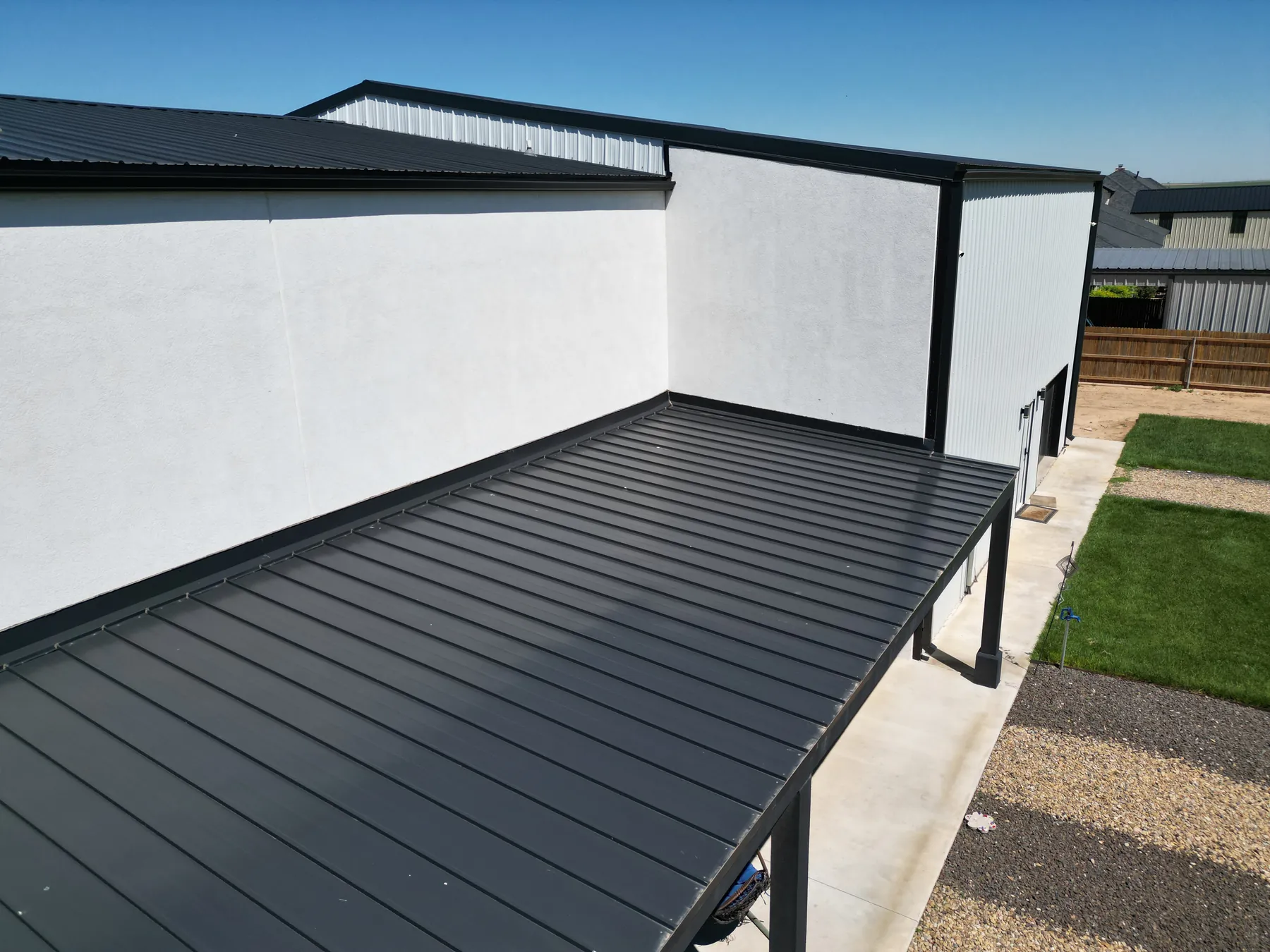
| Standing seam | Vertical panels with raised seams and concealed fasteners. Panels attach with clips so the metal can expand and contract. | Homes and commercial buildings where longevity and a clean look matter most |
| R-panel / PBR | Ribbed panels fastened through the face with gasketed screws. | Shops, barns, ag buildings, and budget-conscious commercial roofs |
| Stone-coated steel | Stamped steel panels coated with stone granules, shaped like shingles, shake, or tile. | Homes that want metal’s strength with a traditional look |
Standing Seam Metal Roofing
Standing seam is the premium choice. With no exposed fasteners, there are no screw gaskets to age in the sun, and the clip system lets long panels move with our temperature swings without working themselves loose. It costs more than other options up front, and it typically outlasts them.
Standing seam is a strong fit for a forever home, a modern or ranch-style design, or any roof where you don’t want to think about it again for a long time.
R-Panel Metal Roofing
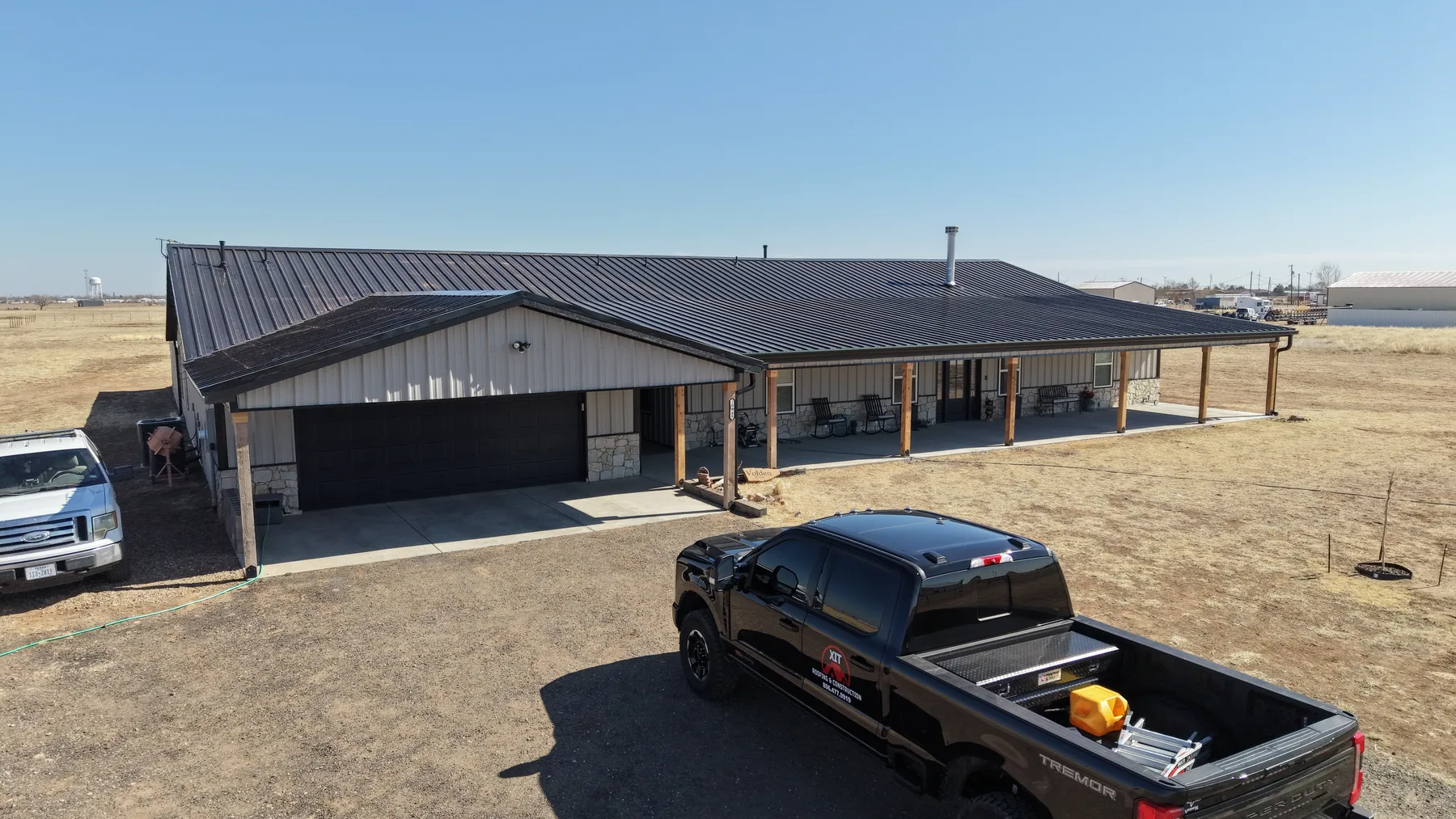
R-panel, also called PBR panel, is the workhorse of Panhandle shops, barns, and commercial buildings. It’s economical, strong, and fast to install. The trade-off is the exposed fasteners. The rubber washers under those screws age, so an R-panel roof should be checked periodically and fasteners replaced as needed.
R-panel also works on homes, especially rural properties where matching the house to the shop makes sense.
Stone-Coated Steel Roofing
Stone-coated steel gives you a steel roof that doesn’t look like one. The panels are stamped to resemble architectural shingles, wood shake, or tile, then finished with stone granules. Many products carry a Class 4 impact rating, and the panels weigh far less than concrete or clay tile.
It’s a good answer for neighborhoods with appearance standards, and for homeowners who like the look of tile but not how real tile handles hail. More on that on our tile, slate, and stone-coated steel page.
Metal Roofs, Hail, and Insurance
Metal resists hail well, but large hail can dent panels. Often the dents are cosmetic: the roof still sheds water and performs as designed. Many insurance policies treat cosmetic damage to metal differently from functional damage, and some exclude it.
What Makes a Metal Roof Last
- Gauge and finish. Thicker steel and a quality paint system resist denting, fading, and chalking.
- Underlayment. High-temperature synthetic underlayment made for metal roofs.
- Trim and flashing. Most metal roof leaks start at trim, valleys, and penetrations, not in the field of the panels.
- Fastening. Correct screw placement, spacing, and torque, especially at eaves and ridges where wind loads are highest.