
What We Do, and What We Don’t
We’re a roofing contractor. That defines our role in a claim, and we think you should know exactly where the line is.
| What XIT does | What XIT does not do |
|---|---|
| Inspect the roof and exterior and photograph the damage | Act as a public insurance adjuster |
| Meet your adjuster at the property and walk the roof together | Negotiate your claim or settlement for you |
| Prepare a detailed construction estimate in Xactimate | Interpret your policy or tell you what’s covered |
| Identify construction items missing from an estimate and document why they’re needed | Promise approval, coverage, or a payout amount |
| Build the agreed construction scope and invoice accurately | Waive, pay, or rebate your deductible |
How a Roof Claim Typically Goes
- Storm and inspection. After hail or wind, we inspect the roof, gutters, siding, and windows and take dated photos. If the damage doesn’t justify a claim, we tell you.
- You report the claim. The claim is between you and your insurance company. You’ll get a claim number and an adjuster.
- Adjuster inspection. Your insurer sends an adjuster to look at the property. With your permission we meet them there, point out what we documented, and answer construction questions.
- The insurer’s estimate. You receive an estimate and, if approved, typically a first payment. It lists the repairs line by line.
- Scope review. We compare that estimate to what it takes to build the roof correctly. If construction items are missing or quantities are short, we submit photos, measurements and supporting construction documentation for the carrier to review.
- The work. We schedule and complete the job. If hidden damage turns up at tear-off, like rotted decking, we photograph it and submit it.
- Final paperwork. We send the final invoice and completion photos. If your policy holds back recoverable depreciation, the insurer reviews the completion documents and may release it according to the policy and claim decision.
Construction Items That Often Need a Second Look
Initial estimates are usually written from a quick inspection, and some things can’t be seen until the roof comes off. These are items we commonly document for a carrier’s review:
- Drip edge at eaves and rakes.
- Starter strip and hip and ridge cap quantities.
- Ice and water barrier in valleys and around penetrations.
- Pipe boots, vents, and flashing that can’t be reused.
- Step and counter flashing at walls and chimneys.
- Steep-pitch and two-story labor where it applies.
- Decking found damaged at tear-off, or decking required for the new roof to be installed to manufacturer specifications.
- Building code requirements that apply to the repair.
- Gutters, siding, windows, and other exterior items that were also damaged.
Whether any item is covered depends on your policy and your insurer’s review. Our job is to make sure they have accurate information.
Insurance Terms in Plain English
- Deductible: your share of the loss. For wind and hail it’s often a percentage of your home’s insured value rather than a flat amount.
- RCV (replacement cost value): what it costs to replace the damaged property with new materials.
- ACV (actual cash value): replacement cost minus depreciation for age and wear.
- Recoverable depreciation: on a replacement cost policy, the amount held back at first and paid after the work is completed.
- Supplement: a request to revise the estimate for items that were missed or discovered later.
- Overhead and profit: a general contractor’s cost of managing a job, which may be included when a repair involves coordinating multiple trades.
Why Documentation Matters
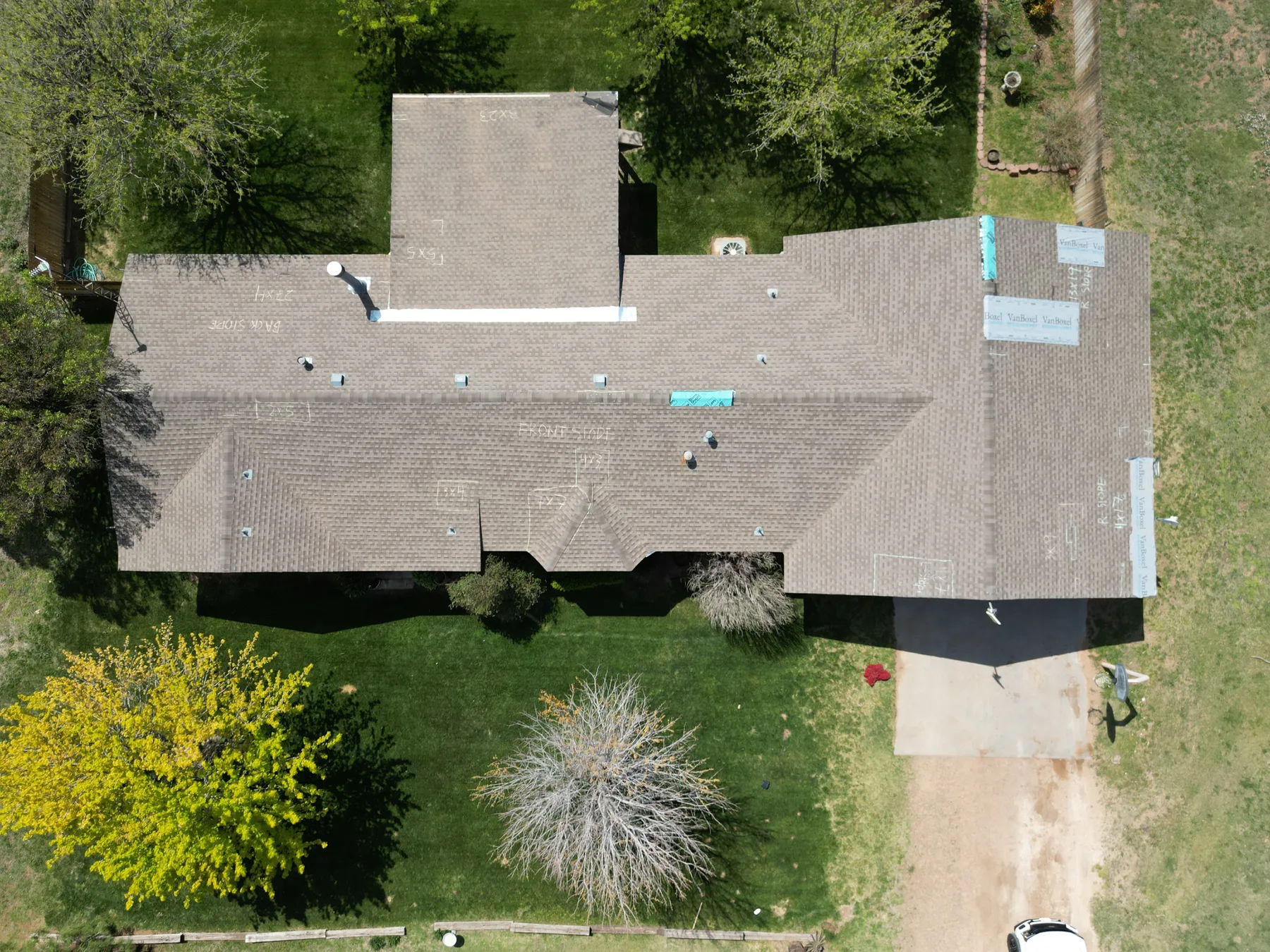
The chalk markings in this Hartley inspection photo identify affected shingles and organize the damage by roof slope. Combined with close-ups and aerial photos, they show where the damage occurred and give the insurance company a clear record to review.
A claim is decided on evidence. Clear photos of each slope, close-ups of hail hits and wind creases, collateral damage on soft metals, accurate measurements, and a line-item estimate give everyone the same facts to work from. That’s what we provide, and it’s what one of our customers described in his review: Bryan met his insurance adjuster on a Sunday morning to make sure all the damage and measurements were accounted for.